
Altered Intelligence
The impact of AI personalization on learning and care relationships between high school teachers & students.
REFLECTION & FOREGROUND
Over the past two years in the UW design program, I've been slowly identifying who I am as a designer. I've found to enjoy the aspect of creating new interactions and especially creating prototypes, whether it be on Figma or on Blender. Basically, the whole research side of design wasn't something that I typically got super excited about.
Heading into this class, I knew it was going to be a challenge, something that's important for me to keep growing as a designer. As a quiet person, I find it more difficult to do many aspects of research, from conducting interviews, to presenting my findings. I decided that I wanted to jump headfirst into this to not only improve my skills as a designer but also as a person. Overall, I would say that I've gotten more comfortable reaching out to participants and having conversations with them. I honestly found that to be the fun part. However, it wasn't all sunshine and rainbows. This class has forced me to learn to be concise with the way I present my findings, and just like in creating video prototypes, to present an overall story. In all honesty, I think this part is still a work in progress, but I'll talk more about it down below! :)
THE PROBLEM
"[AI is] making teachers paranoid and assuming that all the students are doing it on every assignment, which is making teachers get negative about students in a different way.”
BACKGROUND
AI’s introduction to the education system has caused emerging innovations to rapidly develop around the premise of personalized learning and subject specific instruction. However, it has revealed the larger effects of previous tensions in student growth & development, negatively affecting student-teacher relationships.
SKILLS
DESIGN RESEARCH
TEAM
SABRINA COPELAND, ESHA NALLA,
JOY YAO
TIMELINE
10 WEEKS - 2025
ROLE
INTERVIEWER, DATA ANALYST
RESEARCH QUESTION
How does personalized learning through
AI impact the care relationship between high school students and teachers?
RESPONSES
Both teachers & students recognized that AI is here to stay. We came up with many different responses with what a future AI-integrated classroom would look like, ranging from AI being used to amplify teacher-student relationships to AI entirely replacing that relationship.
AI for amplifying connection
Teachers as Guides
Students are solely taught and reviewed by AI, and teachers take on more of a caregiving role, focusing on students emotional needs.
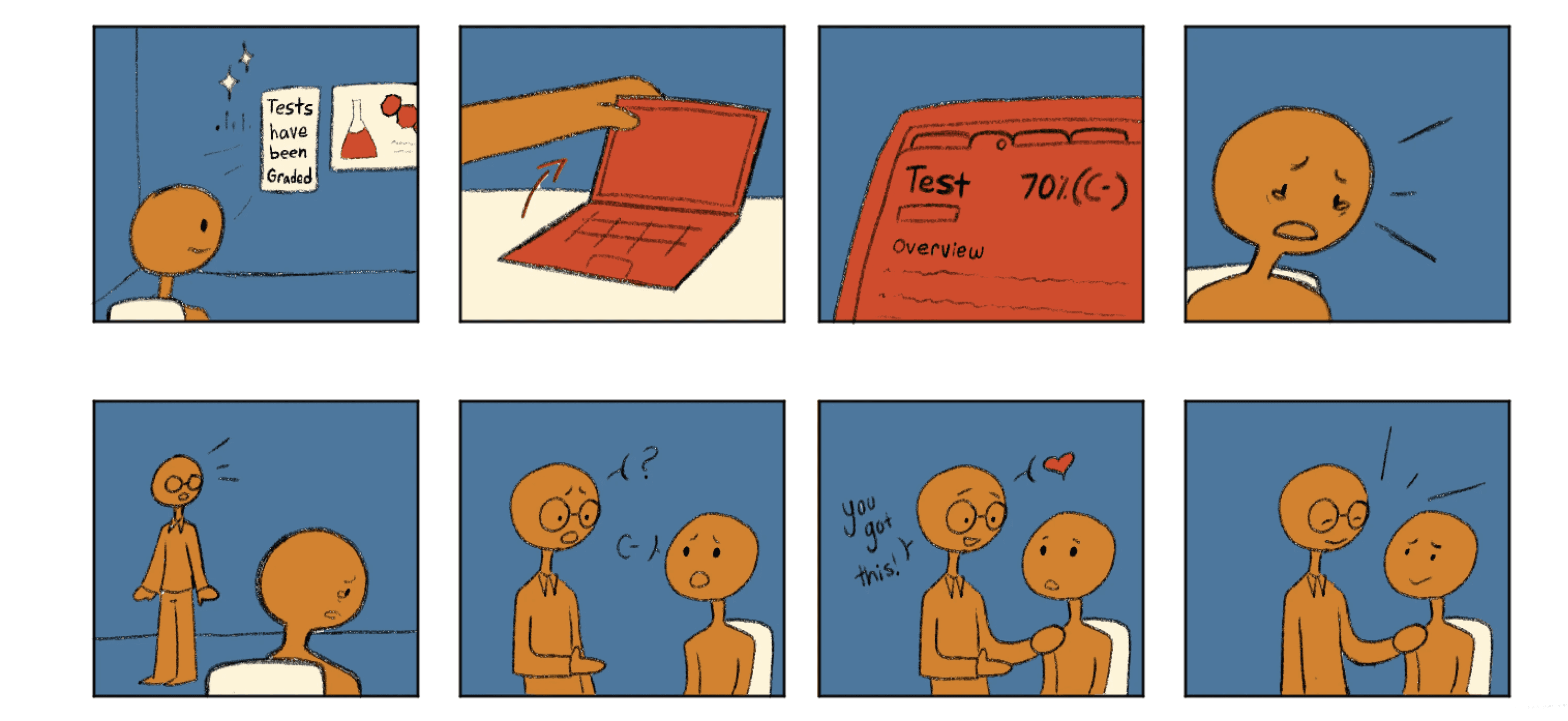
ILLUSTRATION BY ESHA NALLA
AI for replacing connection
Personalized AI Learning Pods
Students learn primarily through personal learning pods, equipped with an AI teacher that caters to each student’s needs & interests.
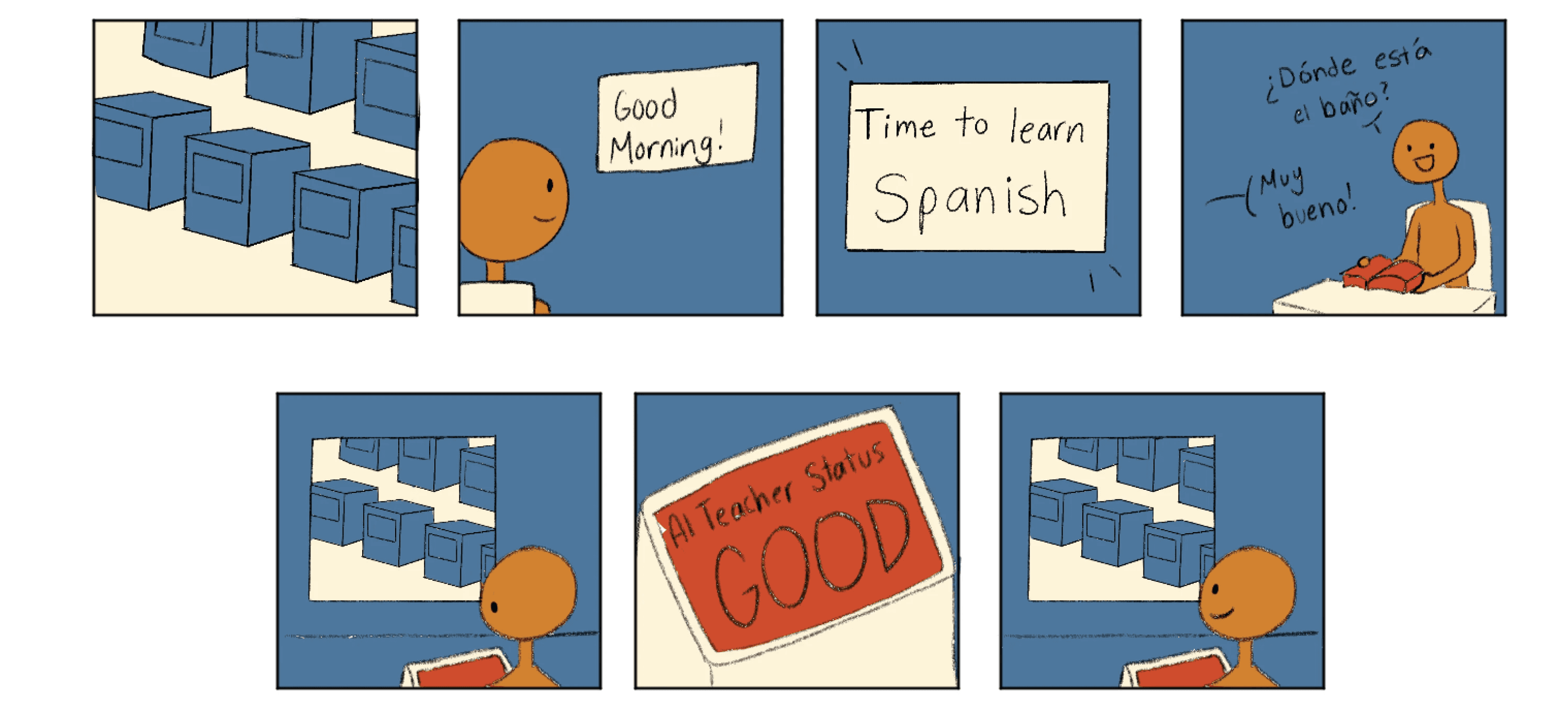
ILLUSTRATION BY ESHA NALLA
So, how did we get here?
We recruited 13 total participants from around the country after creating & deploying a screener survey.
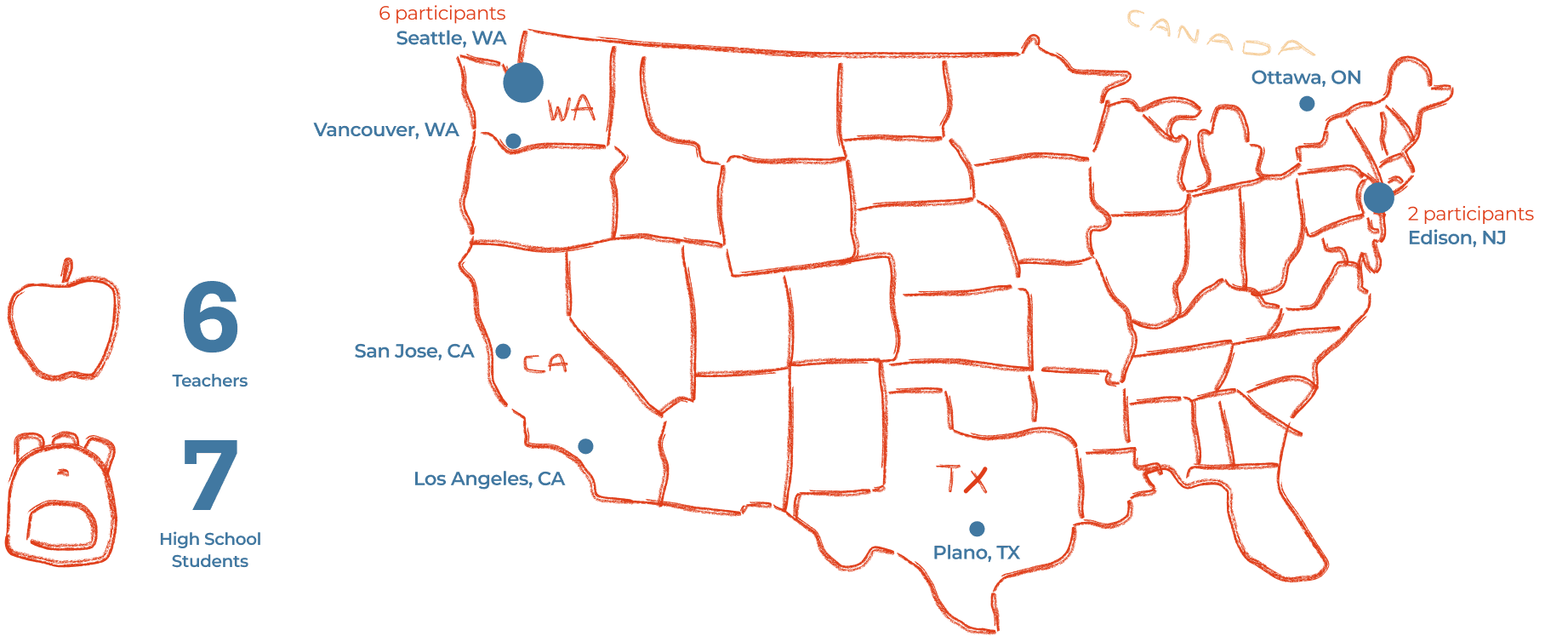
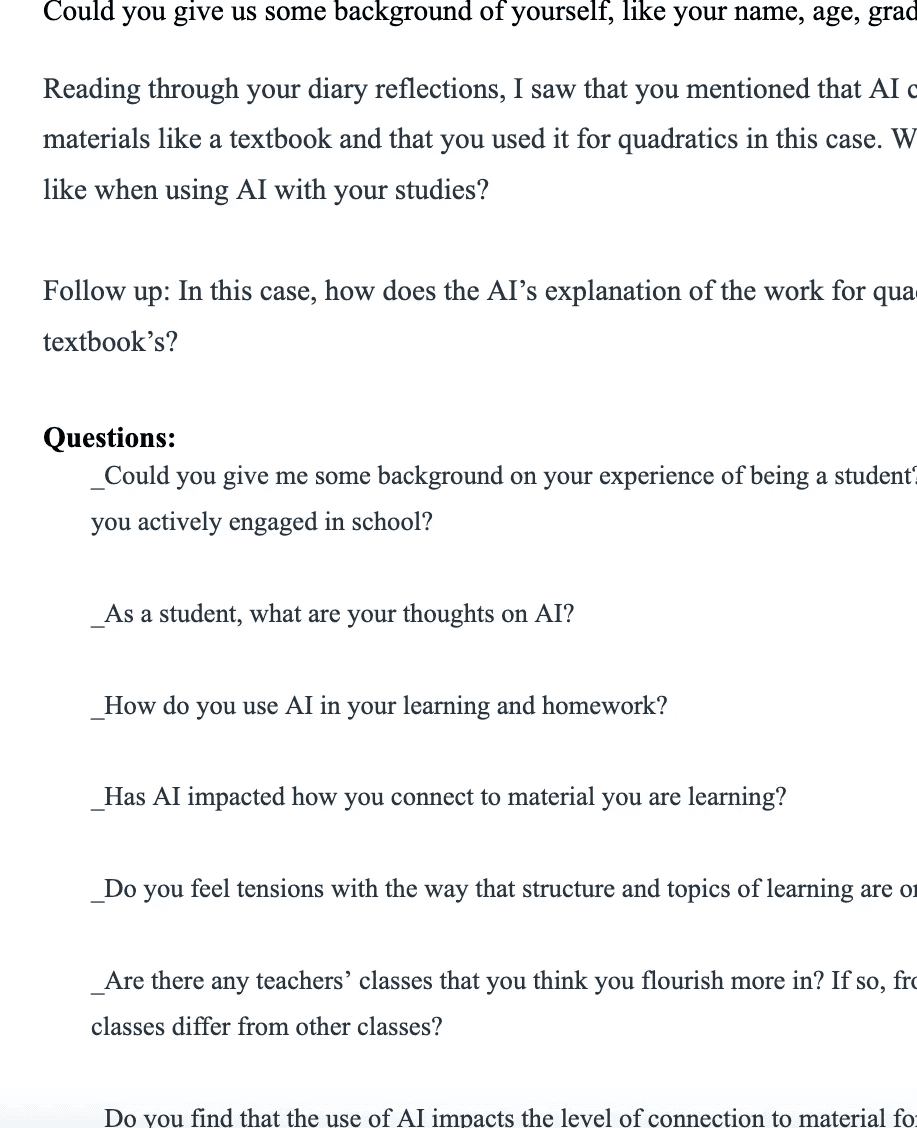
Before interviewing the participants, we had them record their
daily academic-related AI experiences. We wanted to know their
in-the-moment thought processes as they were using AI.

Screener Surveys
We deployed screener surveys initially to get a general understanding from high school teachers & students of AI usage within the academic setting.,
Diary Studies
After screening out participants, we had them do 3-5 day diary studies to record their daily academicrelated AI usage on the fly.
Interviews
We interviewed the participants, using their diary studies to help guide our sessions. Here, we got to pick their brains more about their thoughts and experiences with AI being used personally and by other people.
Scenario Cards
At the end of each interview, we did a scenario ranking activity to frame what each participant's ideal classroom would look like within a future of AI.
REFLECTION
Slow down!
First of all, shoutout to the participants that I had the honor of interviewing. I like to think that my interviews went smoothly, but maybe too smoothly… I stuck to the protocol that my team made! We segmented the protocol into different sections so it was easy for me to jump around if I needed to.
However, I noticed that often times I would finish the interview under the allocated time. Looking back, I had trouble building off my participants answers. If I could do this differently, I'd include some follow-up question ideas within our protocol so I can easily bounce off it to dig deeper.
ANOTHER REFLECTION
We're designers, remember?!
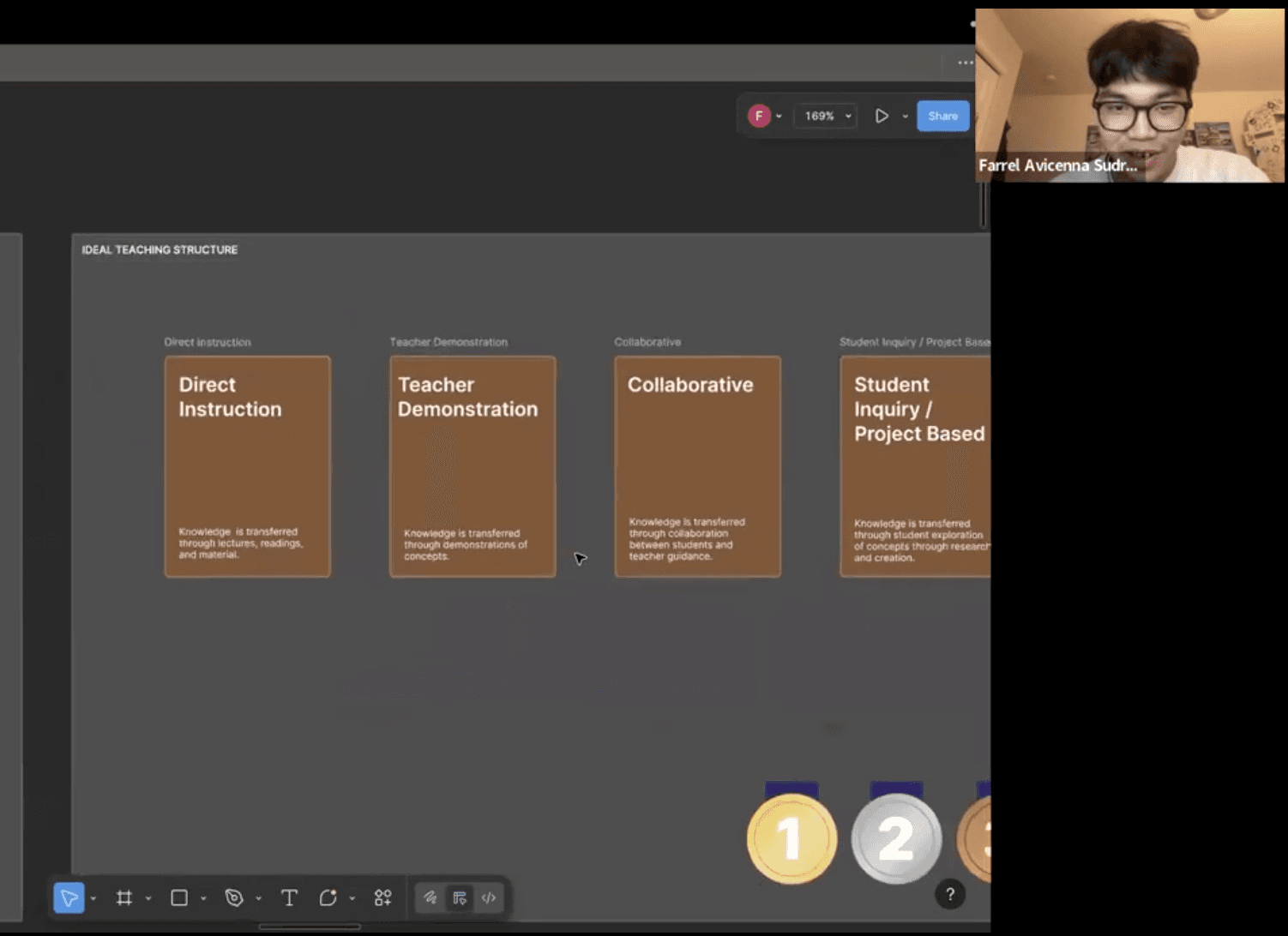
During our interview we had an interactive activity portion that mapped out different scenarios on how AI could look in the classroom.
We initially had this on a Google slide show, and it was okay, but the platform itself was kind of limiting and didn't work how we wanted it to. So then we moved to FIGMA!! That's when I had a realization, wait…. this could totally be a game or something!!!! I created little icons for medals and made decorative screens and some teachers mentioned how cool it'd be if this was brought into the classroom.
This research led us to
five key insights
INSIGHT 1
AI tools are readily available at convenient times, creating a general
trend of over-reliance.
INSIGHT 2
Student disconnect from material and peers reduces personal motivation to engage with the education environment.
INSIGHT 3
With AI becoming more present, some teachers are focusing more on enforcement over connection, eroding trust and care on both sides.
INSIGHT 4
The lack of consistent care due to class structure undermines students ability to connect to resources and support.
INSIGHT 5
Teacher-student interactions built on democratic exchange, bridge the disconnect between students engaging with knowledge and teachers struggling to offers ways of connection.
From those insights,
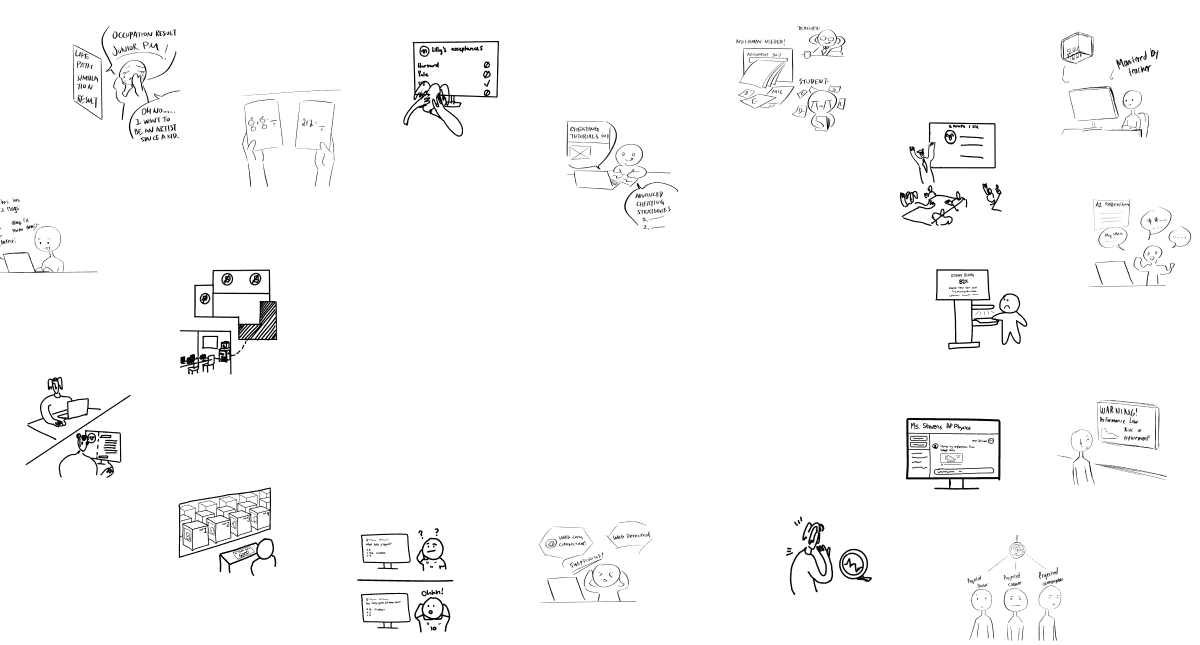
we created sketches
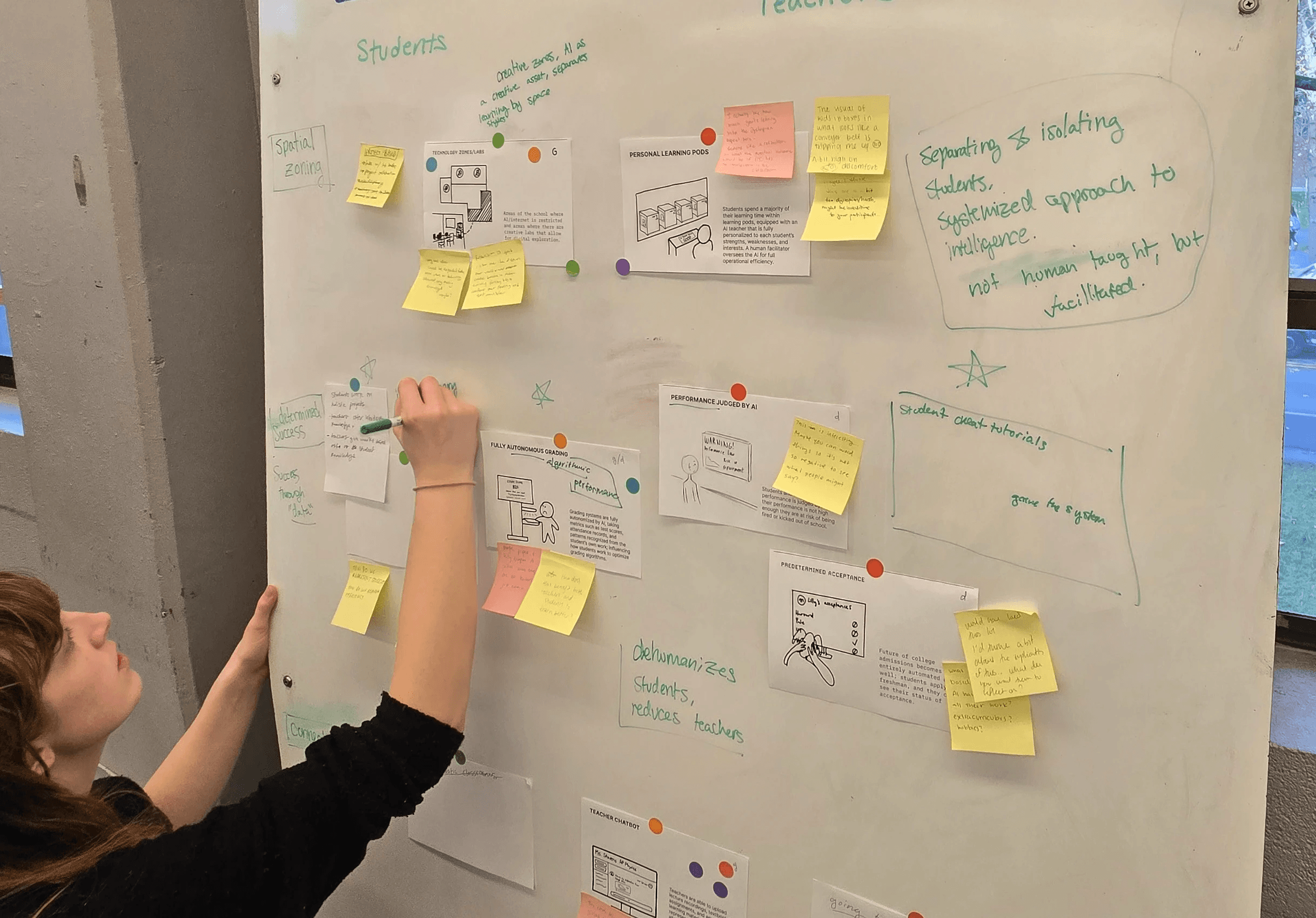
Many of our participants were worried of how AI was currently being used. We wanted to imagine a future of what this could look like, so our sketches included both genuine & dystopian ideas.
We presented these ideas to 3 previous participants and 1 new one.
“Because, I mean, even the way the image is drawn, I guess everyone knew it was going to be dystopian because, you know, that's just not no way for a human to learn and I guess, be in any situation, like, inside a pod.”
REFLECTION
PREPARE PREPARE PREPARE.
To be honest, after our team created the feedback slideshow, I kind of just jumped straight into it without preparing much for the conversation.
I kind of just showed the sketches expecting my partcipant to know how to give the feedback that I wanted. Following these mistakes, my team and I created a new protocol for presenting sketches.
After our feedback sessions, we realized that we were putting these sketches into rigidly defined buckets, genuine and dystopian. These labels prevented free conversation from happening.
We revised the sketches and put them on a spectrum of
isolation vs nurturance
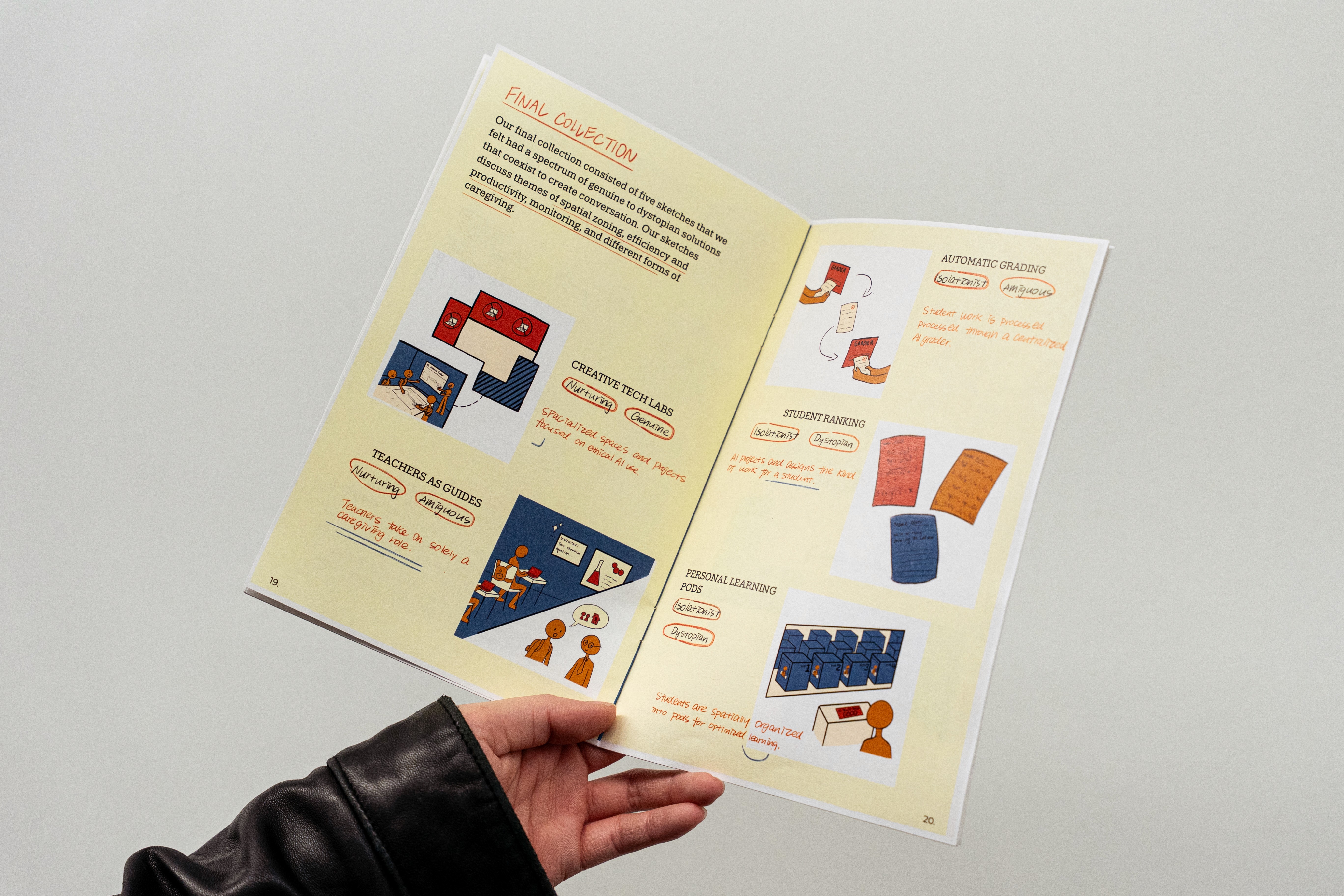
FINAL SKETCHES BY ESHA NALLA
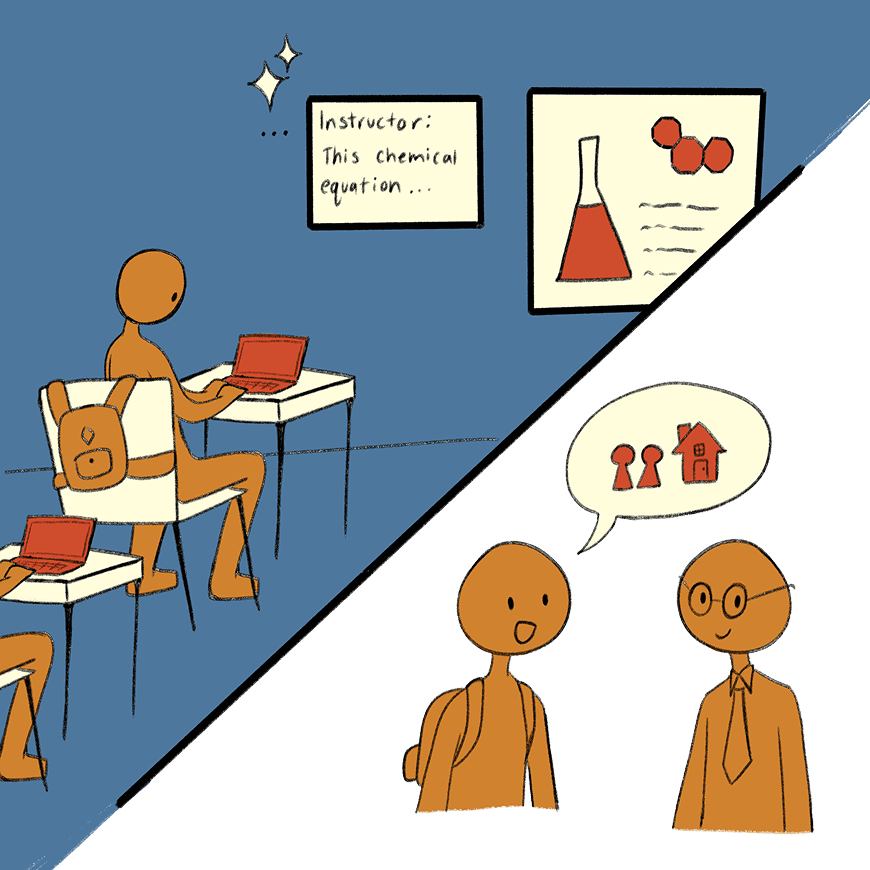
TEACHERS AS GUIDES
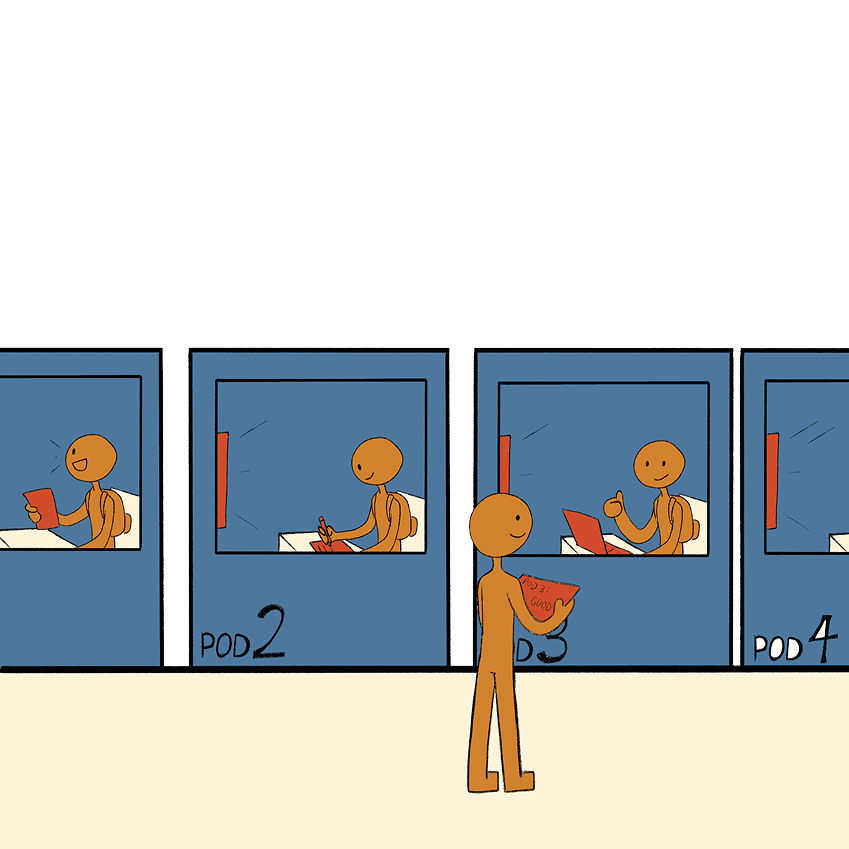
PERSONALIZED AI LEARNING PODS
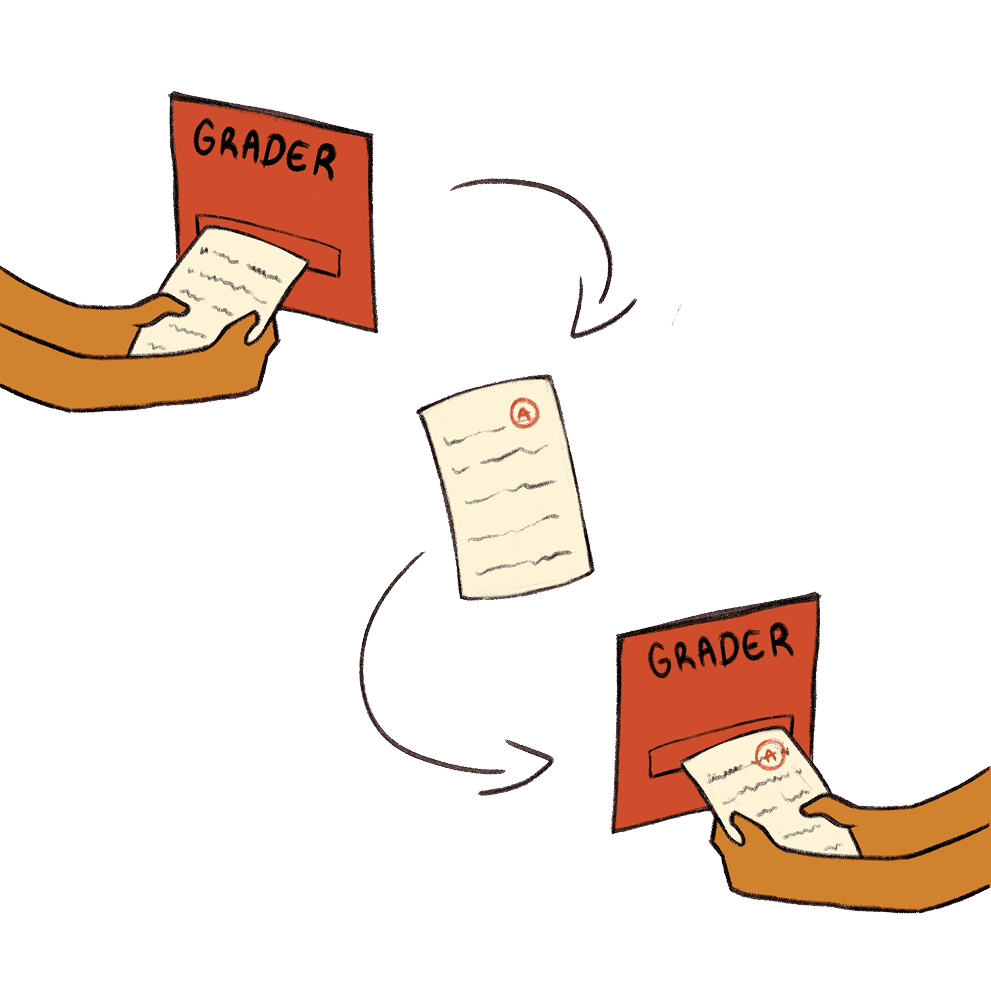
AUTOMATIC GRADING
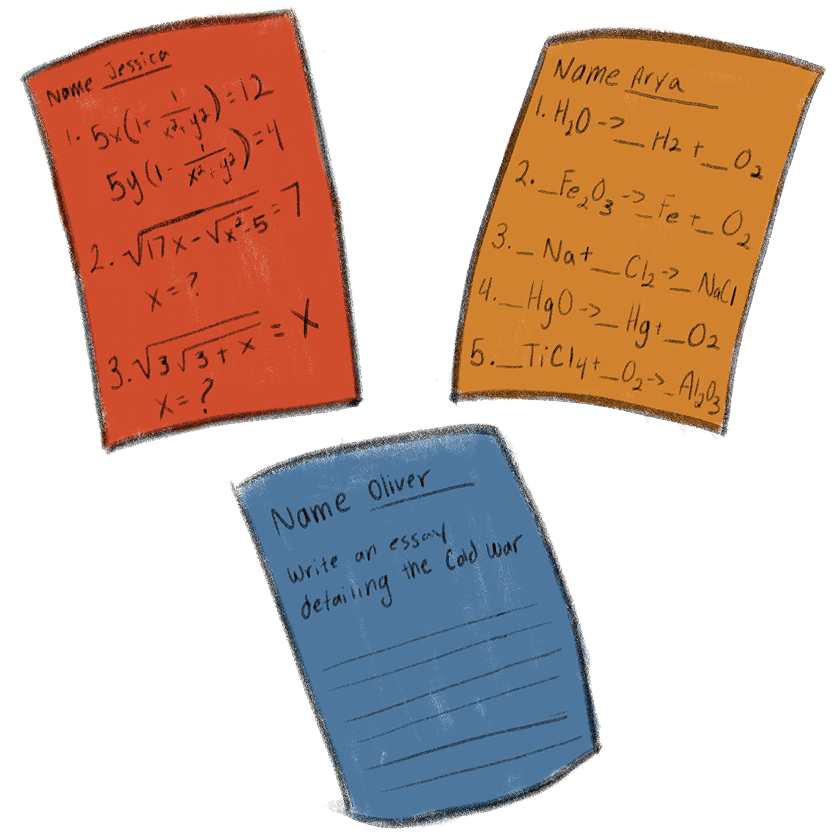
STUDENT RANKING
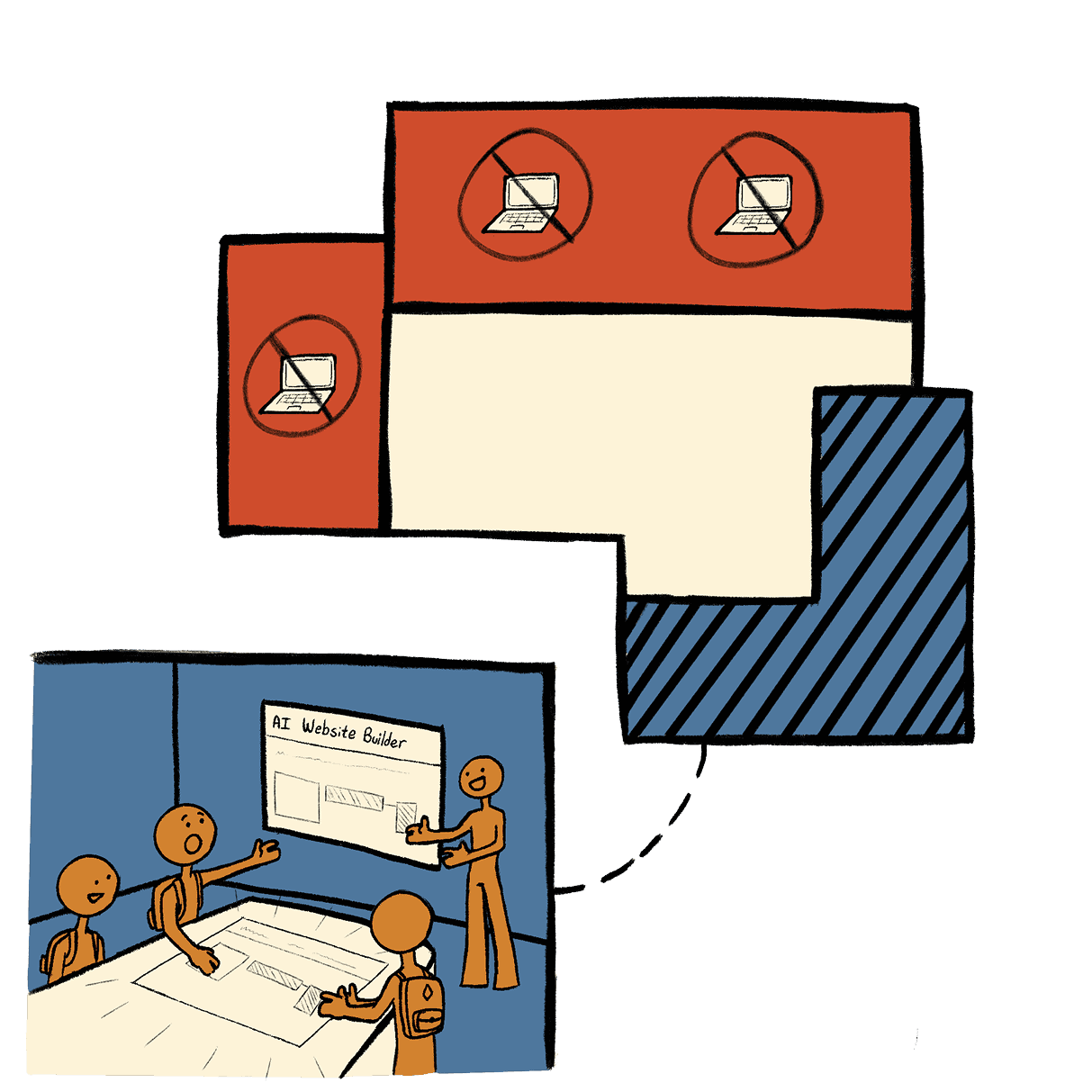
CREATIVE TECH LABS
View Storyboards
Check out our full process workbook below!
Farrel Sudrajat © 2026